
 EN
How Eco-Friendly Sunglasses Balance Sustainable Materials With Product Performance
Can eco sunglasses match acetate’s durability & looks? See how brands balance sustainability, strength, color & fit—no compromise. Get the data-driven path
Evaluating the Material and Performance Trade-off
Brands that add eco-friendly sunglasses to a catalogue usually start with good intentions and one practical question: can a greener material look and perform like the acetate or moulded plastic a customer already knows? The honest answer is that material choice is a trade-off, and the trade-off has to be managed with data rather than enthusiasm.
A recycled or lower-impact feedstock, meaning a material developed as a lower-impact alternative to conventional plastics or acetate, arrives with its own colour behaviour, flow characteristics and mechanical limits. Those properties decide what the finished frame can realistically be, and they are the reason material evaluation happens against defined targets rather than a general impression of sustainability.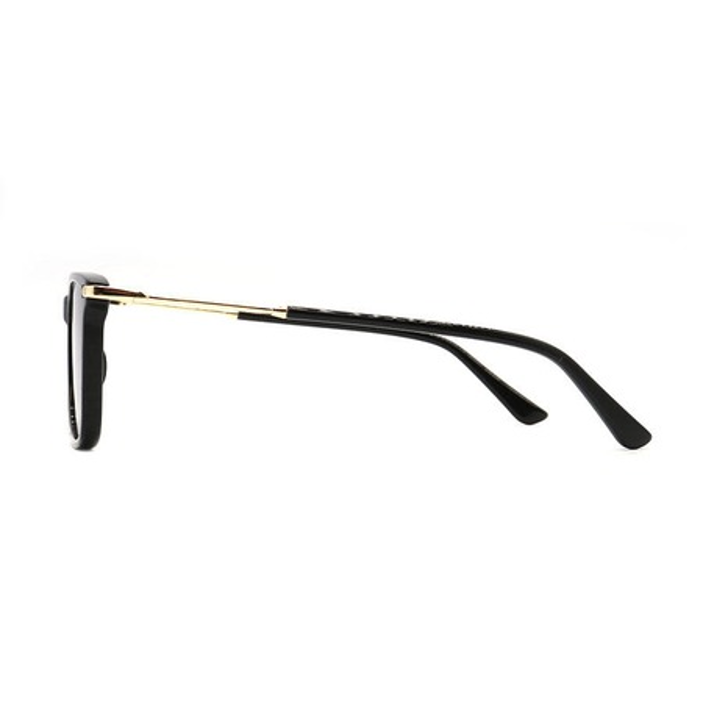
Sourcing and Specifying Lower-Impact Materials
Before a material reaches the production floor it has to be described precisely enough to be repeated in eco-friendly sunglasses.
Sourcing and Specifying Materials for Eco-Friendly Sunglasses
Sourcing begins with understanding what the feedstock actually is, not simply what it is called. Recycled and lower-impact inputs vary in consistency, and that variation shows up downstream in colour, flow and shrinkage. A frame front machined from an inconsistent sheet will not match its temples in tone or thickness.
Material traceability is the foundation of a credible programme. For applicable material systems, traceability and product passport support can be provided, but coverage is confirmed for each project rather than assumed across the board, because a claim without a record behind it is a liability rather than an asset.
Translating Properties Into Process Parameters
Specification turns material properties into production parameters. Thickness tolerances, cutting orientation, drying or conditioning steps and machining feeds are all set against the specific material rather than inherited from a conventional acetate sheet.
Without that step, eco production depends on operator judgement, and judgement does not scale. Specification converts a promising material into a repeatable process, so the tenth batch looks like the first rather than drifting month by month. A written parameter set is what makes a lower-impact material repeatable from one run to the next, rather than dependent on who happens to be at the machine.
Qualifying a Material for a Frame
Qualification is not automatic, and the named families developed with Regenesis Materials are not at the same stage. CARBONITE is the most mature, with defined product and manufacturing take-up, AEROLITE is focused on lightweight engineering and production validation, and OCEANTATE is an ocean-plastic-based alternative to acetate sheet developed for fashion frames.
Each material is also assessed against the demands of the product it is intended for, including mechanical strength, dimensional stability and finishing response. A material that performs well in a thin sports wrap may not suit a thick, blocky fashion front, and the same laboratory result can lead to different decisions depending on the frame.
Matching Materials to Performance Demands
Performance is measured in structure, colour and weight rather than in intent.
Mechanical Strength and Dimensional Stability
Mechanical strength determines whether a frame survives hinge insertion, flexing and handling. A lower-impact material must hold screw threads and hinge plates without cracking, and it must resist the stress that concentrates around the endpiece. Where a material is weaker in one direction, geometry can compensate only if the limit is known before tooling.
Dimensional stability matters as much. If a material moves after machining, a front that measured correctly in the workshop can drift out of alignment once assembled. Stability is checked through machining and polishing rather than assumed from the sheet, and the practical test is sample-to-bulk consistency rather than one good prototype.
Colour and Pattern Consistency
Colour is the most visible risk. Recycled and lower-impact feedstocks can carry tone variation a conventional sheet does not, and a slightly uneven front is immediately obvious on a retail display. A programme has to decide early whether it wants uniform colour, a deliberate pattern or a naturally varied look.
Pattern consistency adds a second layer. In striped or marbled material, the cut determines where the pattern lands on the frame, so planning it so front and temples read as a set is a production skill rather than a finishing touch.
Weight, Balance and Geometry
A lighter material can reduce overall mass, but if the balance shifts toward the front, the frame sits differently on the face. Setting a weight target and a balance target together keeps the design grounded, because total mass alone does not describe how a frame wears.
Frame geometry is tied to those targets. Front width, temple length, lens shape and bridge dimension all interact with stiffness, and a softer material may need more material in the temple to hold shape, which adds weight. The aim is a frame that meets its fit and durability targets with a lower-impact stock.
Manufacturing and Inspection
A material only proves itself on the production floor, where finishing and inspection either confirm eco-friendly sunglasses or expose them.
Injection and Finishing for Eco-Friendly Sunglasses
Injection is central to many programmes because it allows consistent shapes from lower-impact compounds. Moulding sets the base geometry, and the finishing that follows determines whether the frame reads as a quality product, since a moulded front with a poor surface will not be rescued by polishing alone.
Finishing green materials requires attention to how the surface responds. Some compounds polish differently from conventional plastics, so tumbling media and polishing sequence are adjusted to the material rather than applied as a fixed routine. Keeping tooling close to finishing shortens the distance between a surface problem and its fix.
Three Inspection Stages
Incoming inspection checks materials and components before production, which is where an inconsistent feedstock is most cheaply rejected. In-process inspection watches key production and assembly stages, catching drift before it compounds. Final inspection checks finished eyewear before packing, comparing it against the approved sample.
Incoming inspection carries extra weight here, because lower-impact materials vary between batches. Checking early keeps a colour or stability problem from being discovered after frames are assembled and boxed, and laboratory instruments for transmittance, haze, colour and hinge fatigue support those decisions with measurements.
Deciding What Enters Production
The final discipline is deciding what is ready for a live order and what stays in development.
What Eco-Friendly Sunglasses Production Requires
A material in development is still being characterised. It may work in one frame and fail in another, or its colour may not yet be controllable enough for retail. Keeping it in development protects the brand from a batch it cannot defend at the point of sale.
A production-ready material has been through sampling, has defined parameters and has shown sample-to-bulk consistency. It can be quoted with confidence and produced repeatedly. The line between the two should be explicit rather than left to optimism, and buyers benefit from a partner that states it plainly.
Sample Approval and Packaging
Sampling is where a concept meets reality. Engineering review turns the brief into a manufacturable specification, a sample is built, and approval comes before any bulk commitment. For eco eyewear the sample is also the moment to confirm colour, finish and fit against the agreed targets.
Approval should be documented, because a signed sample is the physical reference for the order. Packaging then closes the loop, and the same discipline applies: materials checked on arrival, presentation inspected, and the packed product confirmed before delivery, so a programme careful about its frame is not careless about its box.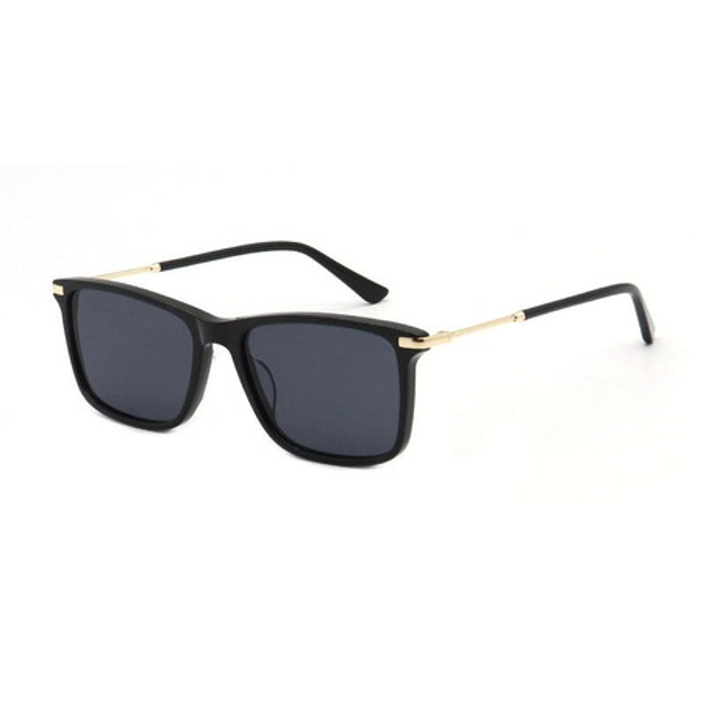
Frequently Asked Questions
Can sustainable sunglasses match the durability of conventional frames?
It depends on the material and frame combination. Provided the material is matched to the frame and the geometry adjusted to its behaviour, the limiting factor is usually how well it has been characterised rather than the material itself. When strength and stability are checked during sampling and confirmed in production, a lower-impact material can meet the same fit and durability targets.
Which materials are used for eco eyewear?
Work spans acetate, metal, titanium, TR90, PC and mixed constructions alongside lower-impact options developed with Regenesis Materials. CARBONITE is the most mature of these, with defined product and manufacturing take-up, AEROLITE focuses on lightweight applications, and OCEANTATE is an ocean-plastic-based alternative to acetate sheet for fashion frames. Availability varies by project.
Does a lower-impact material automatically make a frame better?
No, and treating it that way is a common mistake. A lower-impact material is one decision among several, and eco-friendly sunglasses still have to meet the same strength, stability, colour and fit requirements as any other product. Where the material performs, it supports a legitimate story. Where it does not, the right response is to adjust the design or choose another material.



