
 EN
Choosing the Right Sports and Outdoor Eyewear Manufacturer for Successful Product Development
Choosing the right sports eyewear manufacturer impacts cost, quality & scalability. Discover 10 must-ask questions on materials, tooling, lenses & QC.
Why the Supplier Choice Decides a Sports Eyewear Programme
Choosing a sports eyewear manufacturer shapes everything downstream: mould cost, sample quality, replenishment stability and how cleanly a design can be repeated across seasons. Sports and outdoor eyewear sits in a demanding category, because the frame must hold geometry under movement while the lens manages glare, UV exposure and impact at the same time.
A factory that mostly assembles bought-in parts struggles to protect that geometry. The buyer needs a sports eyewear manufacturer that keeps material, moulding, lens handling and finishing under one roof, so a change to a design does not stall between vendors working to different tolerances. This guide works as a buyer-side checklist rather than a sales pitch.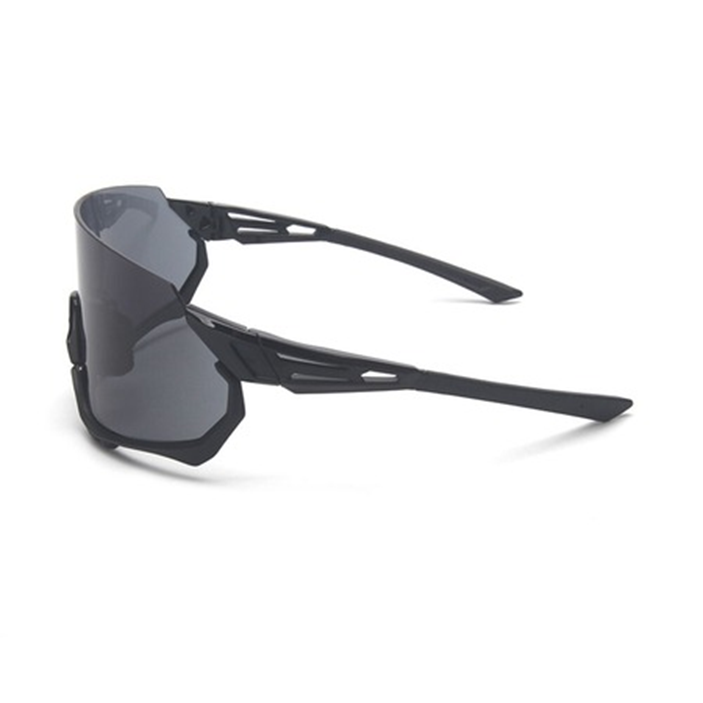
Material and Moulding Capability
Capability decides weight, flex behaviour and how gracefully a sports eyewear manufacturer can build a frame to absorb impact.
Frame Material Selection for Active Use
Material choice sets the ceiling for the frame. TR90 gives a light, flexible feel and recovers shape after flexing, which suits wraparound designs that must stay seated during movement, while injection-moulded PC supports more complex geometry and consistent wall sections.
Acetate brings depth of colour but behaves differently under stress, so it is normally paired with a suitable construction rather than used alone. Every material carries a trade-off between weight, rigidity and finish. Ask which combinations a factory builds routinely, not which it can attempt once, because routine work is where the process is controlled.
Injection, TR90 and Mixed Constructions
Injection capacity determines whether a shape can be tooled reliably and reproduced run after run. The useful questions are practical: how many moulds run in-house, how wall thickness is controlled, and how a tool is maintained between seasons rather than patched when it starts to flash.
TR90 and PC are both injection routes but they are not interchangeable. Each material has its own processing window, cooling behaviour and shrinkage pattern, and those differences appear in whether parts fit together after moulding. Mixed constructions add a second discipline, since a moulded front joined to a metal temple needs consistent locating points to keep hinge alignment true.
Mould Ownership and Sampling Discipline
Tooling is where a budget programme either stabilises or slips. Before committing, ask who owns the mould, how modifications are handled, and how a geometry change is reflected back into the tool rather than compensated for at assembly. Ownership decides what happens if the relationship ends.
Sampling should be a controlled step rather than a rushed favour. A disciplined factory produces a sample that represents the intended production process, records the settings used, and can explain any deviation from the drawing. A structured workflow moves from brief through engineering review and sample approval before materials and tooling are locked.
Lens Options and Optical Quality
Lenses carry much of the performance promise, so lens handling deserves the same scrutiny as frame tooling.
Polarised and UV-Protection Configurations
Polarised lenses cut reflected glare from water, snow and road surfaces, which is why they anchor most sports and outdoor programmes. UV-protection lenses address a separate requirement. Both are options that can be specified, but the buyer should confirm which lens base, tint and treatment combination is actually being quoted.
That single clarification prevents an order arriving with a lens that performs differently from the approved sample. Custom colour work also extends beyond the frame, because lens tint, mirror finish and gradient interact with frame colour. A paired sample before bulk avoids a mismatch that is expensive to correct later.
Lens Uniformity, Stress and Haze
Lens faults are not always obvious at a glance. Uniformity across the surface, internal stress and haze all affect how a lens performs and how it looks once mounted, so these are measured rather than judged by eye. A steeply curved sports lens shows such faults more readily than a flat one.
A laboratory that measures light transmittance, checks uniformity at multiple points, reads haze and detects internal stress is verifying a specification rather than trusting it. That distinction separates a factory that tests from one that simply promises, and it matters most when a programme runs across several lens tints.
Wraparound Geometry and Lens Curve
Sports eyewear often uses wraparound geometry to shield the eye from wind and side light. That curve is not decorative. It changes how a lens must be cut and mounted, and how the temples sweep back to hold the frame during movement, so frame and lens decisions belong together.
A frame tracer captures shape and dimensional data to support accurate edging, and a lensmeter confirms the power and optical centre of the mounted lens. Without those checks a wraparound frame can fit loosely or sit unevenly once lenses are installed.
Quality System and Documentation
The quality system protects the buyer after the sample is approved, and a sports eyewear manufacturer should make it visible at every stage.
Three Inspection Stages in Practice
Incoming inspection checks materials and components before production begins. For a sports programme it covers frame material, lenses, hinges and any metal parts, so a defective batch is caught before it enters the line rather than after assembly has consumed it.
In-process inspection watches key production and assembly stages, where hinge setting, temple alignment and lens mounting create deviations that compound. Final inspection reviews finished eyewear before packing, covering appearance, function and presentation. Three stages together mean a fault is less likely to travel from raw material to a retail carton.
In-House Testing and Export Documentation
Naming the equipment tells the buyer what a factory can verify without sending samples away. A drop ball impact tester supports impact checks, a frame fatigue tester exercises hinge and temple durability, and optical instruments cover transmittance, uniformity, haze and stress. A colour assessment cabinet provides consistent viewing conditions.
Documentation support is a practical part of choosing a partner, because destination markets ask for different evidence. The right approach aligns paperwork to the specific project and market rather than assuming one report covers everything, and confirms during quoting what can be provided for the exact materials, lenses and components in the programme.
Scaling and Communication
Approval is a milestone rather than a finish line, and the work between sample and shipment decides whether a sports eyewear manufacturer earns repeat business.
Sample-to-Bulk Control and Capacity
Sample-to-bulk consistency depends on process control. If a sample was made on a bench and bulk runs on a line, variables such as material batch, colour dosing and cooling time can shift the result. Comparing bulk against the approved sample at agreed checkpoints keeps a small drift from becoming a full run.
Capacity matters as much as control. An integrated base covering development, multi-material production and surface treatment can absorb a growing range, while a newer overseas site dedicated to sunglasses supports volume in that category. Ask how tooling and specifications are archived, and how quickly a frame can be restarted.
Development Communication and Repeat Seasons
Poor communication costs a great deal in sports eyewear development. When frame geometry, lens choice and logo placement are spread across conversations without one shared record, the approved sample can still differ from what production builds. A workable cadence is simple: confirm the specification in writing, review the engineering comments, approve the sample formally, and flag changes before they reach tooling.
Each step should leave a document the buyer can point back to. That discipline is what allows a proven design to return next season with the same colour, the same fit and the same lens behaviour, which is usually the real question behind a supplier decision.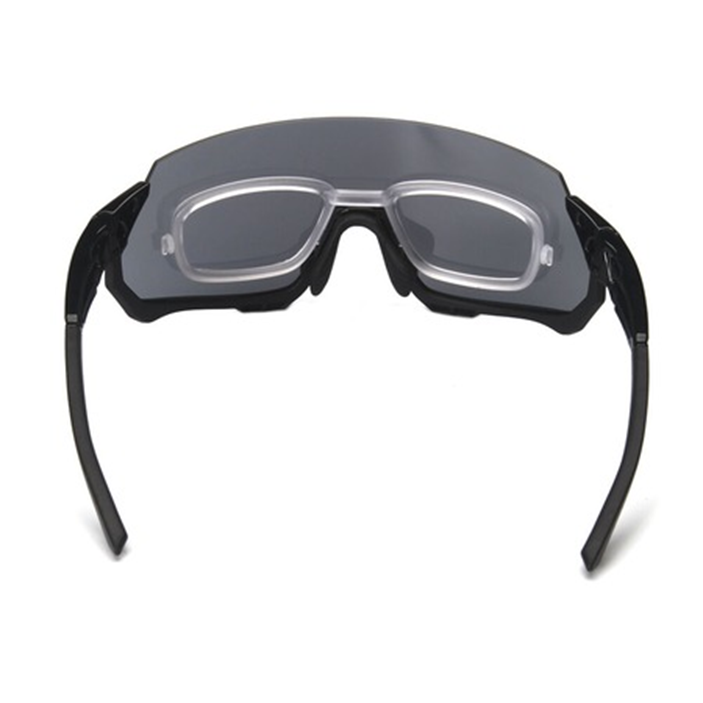
Frequently Asked Questions
What should a buyer ask a sports eyewear manufacturer before a first order?
Start with material and process capability: which frame materials the factory moulds in-house, how tooling is owned and modified, and whether it runs acetate, metal and injection under one roof. Then ask about lenses, because polarised and UV-protection options should be quoted with a specific base, tint and treatment. Finish with inspection stages, testing equipment and the documentation available for your materials.
How do TR90 and injection-moulded frames differ for outdoor eyewear?
Both are injection routes, but TR90 and PC behave differently in the mould and in use. TR90 tends to feel lighter and more flexible, returning to shape after flexing, which suits active and wraparound designs. PC supports more complex geometry and consistent wall sections. Each has its own processing window and shrinkage pattern, so a factory needs to treat them as distinct specifications.
How is sample quality kept consistent when production scales up?
Consistency comes from recording the settings used to make the approved sample and applying them to bulk production. Material batch, colour dosing, moulding parameters and cooling time should be documented, so the line reproduces the sample rather than approximating it. Inspecting against the reference at agreed checkpoints then keeps small drift from becoming a full run of non-conforming frames.



